
This particular one is described as being lesser. I don't know what that means and don't understand how that can be the case. It's stunning. I feel like I can only describe it in the way that it feels different from a lot of other contemporary fiction, so much of which seems to be so in love with its conceptual cleverness that it stops being about the world. That's what books are supposed to do for us, right?
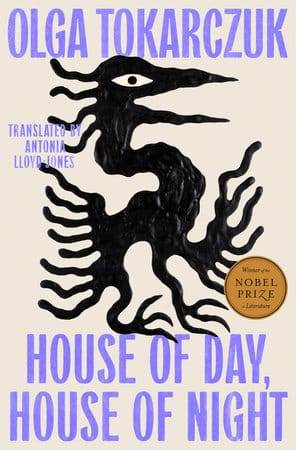
As an aside, I'm sitting at a downtown cafe in a city outside Washington DC writing this. HOD,HON is about, at times, people who come to a small town for various reasons. It's about the complex patterns and configurations that make up the world. I'm sitting here staring out at people walking and driving by. Kids being carried, pushed, worn, etc. I'm catching snippets of conversations, and the afterglow of HOD,HON has me imagining us all to be particles pushed around by the heartbeat of the world. There are deeper patterns normally hidden from us that we get to glance occasionally.
OT is doing this to me. This woman with short bangs spins out these sentences and is able to momentarily pierce this surface. Allowing you to see not the thing itself, but its movement, the effect it has. She does it through details that are cast off one after the other.
There's a couple next to me who are talking about interior design decisions for what feels like a newly purchased house. "It would be nice to have space in that bathroom to set things." What are we doing? How can this be the stuff that fills the minutes and hours and days of our lives? "How is your baguette?" I feel like the guy with the bread in Michael Clayton. Again, Olga has done this to me. You can imagine how people go insane. It won't feel like insanity. It'll be the opposite; it'll feel like resisting the pull of something evil and false. It'll feel like survival.
Apparently this is one of her minor works, or it's the early form that was still rough around the edges that she'd go on to perfect and be lauded for. It's shaggy and uneven, folks say. I think it's remarkable. If these are just the seeds of ideas that she'd expand on in later work, hoo boy.
I'd read THE EMPUSIUM before and enjoyed it. That book and my experience of it was clouded by a slow-dawning recognition that a move to the midwest from the east coast wasn't working out, so even though it was obviously good, it didn't have the pop that HOD,HON has. It didn't make me want to talk to other people about it.
What I want to say about it has very little to do with the book itself. Sure, I marked that thing up. I've been blathering to anyone who'll listen, saying things like "see it's about borders and not just the ones between countries" and then waiting for them to nod in wise understanding (they never do and shouldn't). Its themes and ideas are so well-developed you kind of can't help but read it that way, but the thing that it makes me think about more than anything are the problems I have with modern fiction and finding a book to read.
Since having children and feeling the notion of spare time wrung out from my life, I've grown frustrated with a lot of the literary fiction that gets released and recommended (I should note here that I'm talking specifically about the type of book that ends up on the New Releases table of a well-curated independent bookstore). So much of it feels so high-concept, and the work exists to serve the concept instead of the reader. HOD,HON is about as low-concept as can be: what if there was a valley that used to be German but then became Polish. You hear that and might think that there's some kind-of, this could be adapted to a movie where Josh O'Connor is playing a peasant vibes. You'd be wrong. I could tell you that part of it takes place after World War Two, and you might think that there's some post-war historical fiction intrigue. Wrong again. You might even think that there's some character study angle where our American brains will be recast through experiencing what life is like in the outer rims of our conception of Europe. Strike three, brother.
It is a book about borders. I wasn't kidding there. It's also a book that's about the following: people who worship knives, how to cook mushrooms, destruction, mysterious twins, a lady-saint with a Jesus-face, wigs, and some pretty out-there theories about moonlight. The book is sad, but it's not a bummer.
I think that a lot of the problem is what books get recommended, and that we don't have a better way to discover books. Give credit, I suppose, to the marketers who can tell you almost everything you need to know about a book by how the cover is designed. You walk into a book store, and you can feel a book communicating to you, helping you to solidify your image of yourself, reflecting back to you the version of yourself you'd like the world to see. We don't need that. Peter Gizzi wrote in the great poem 'Revival,' "I want an art that can say how I am feeling if I am feeling blue sky unrolling a coronation rug onto the bare toe of a peasant girl." That, but for books. Contemporary fiction rarely surprises. Shouldn't it?
This has turned into less of a review than it is a request for a certain type of book that's hard to find. All suggestions welcome.